
Tepay (Payable)
P2P payment operations & settlement workflows Node.js, Express.js, MongoDB, React, Socket.IO, OneSignal
/ Overview
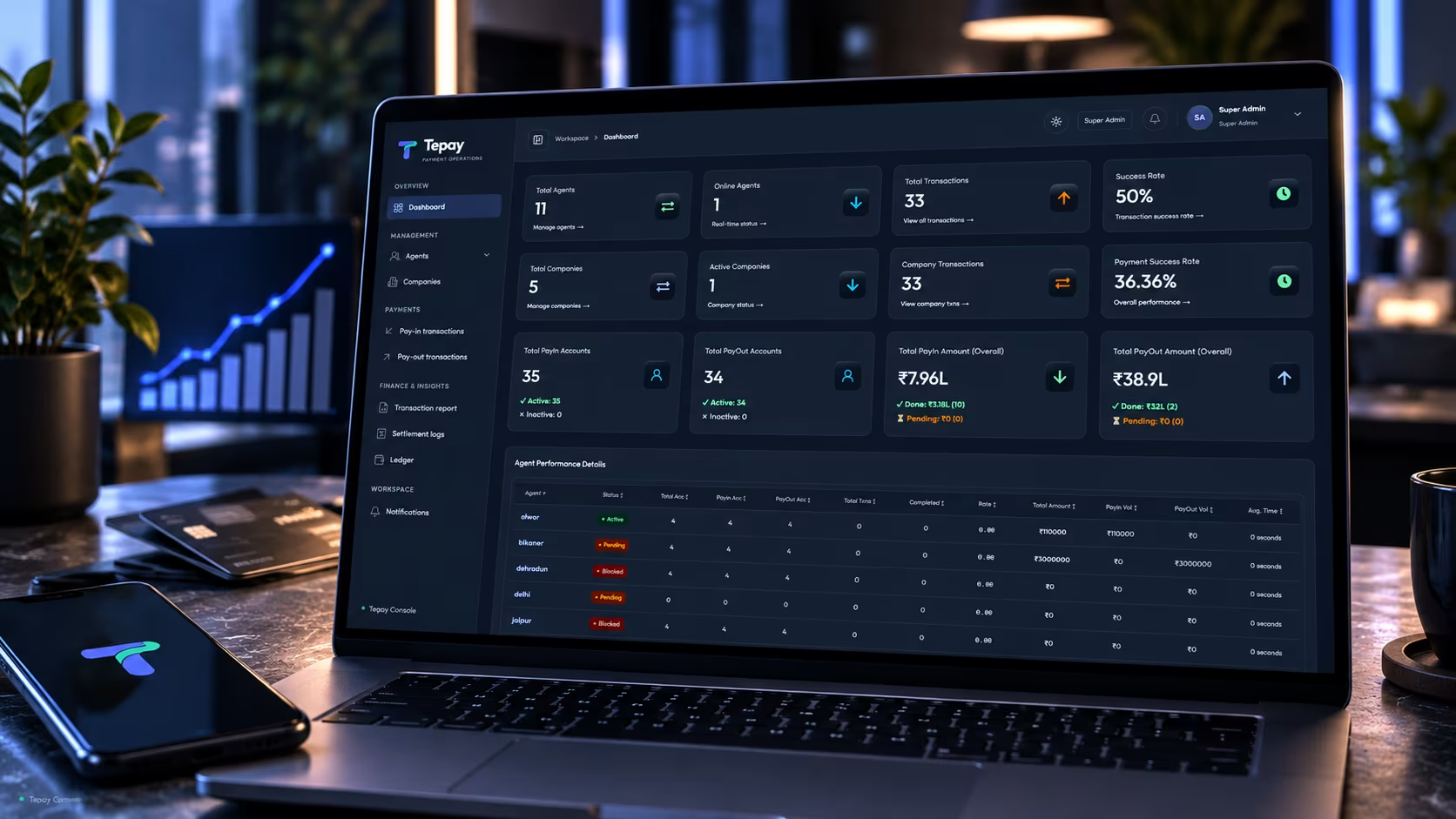
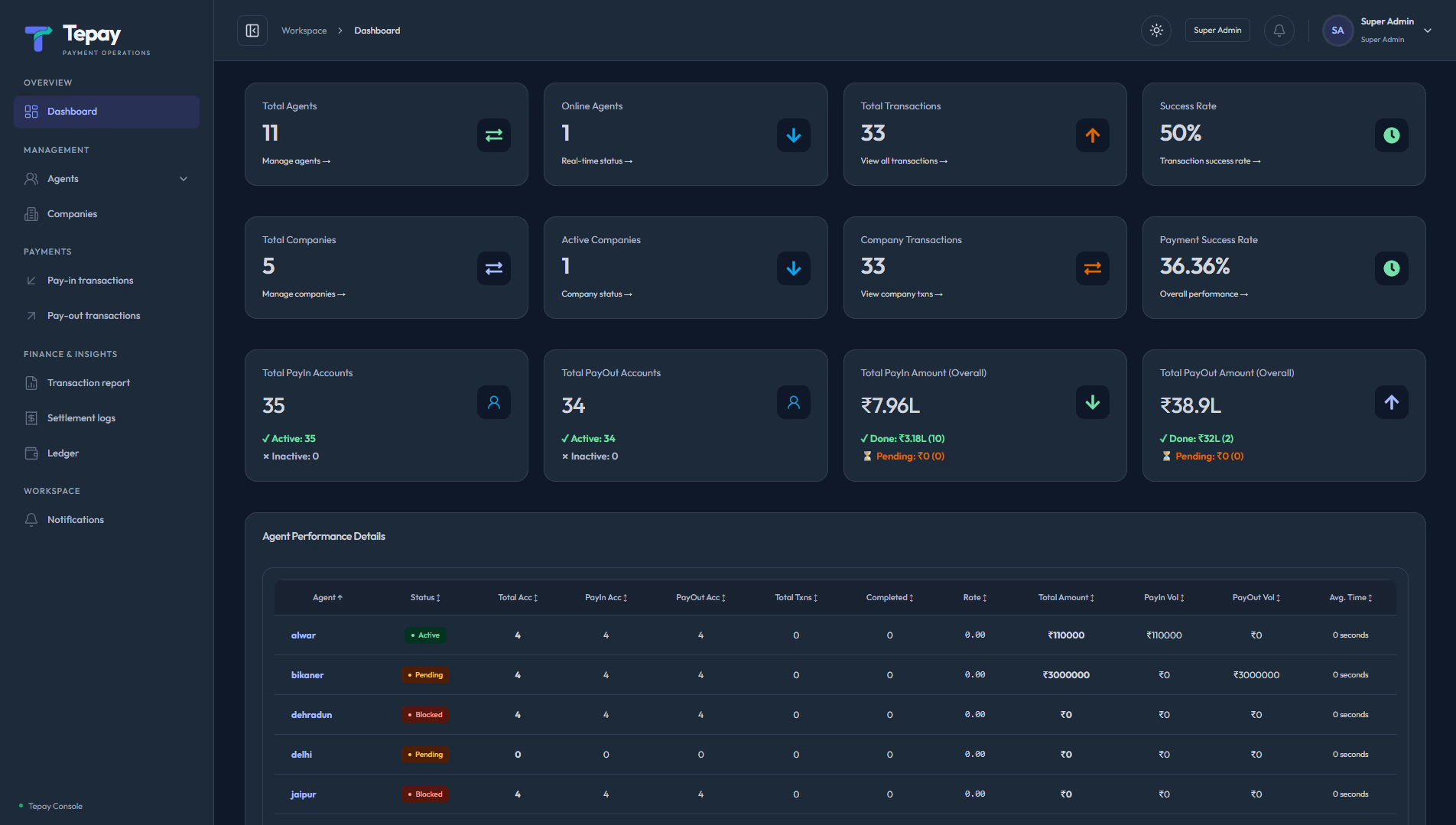
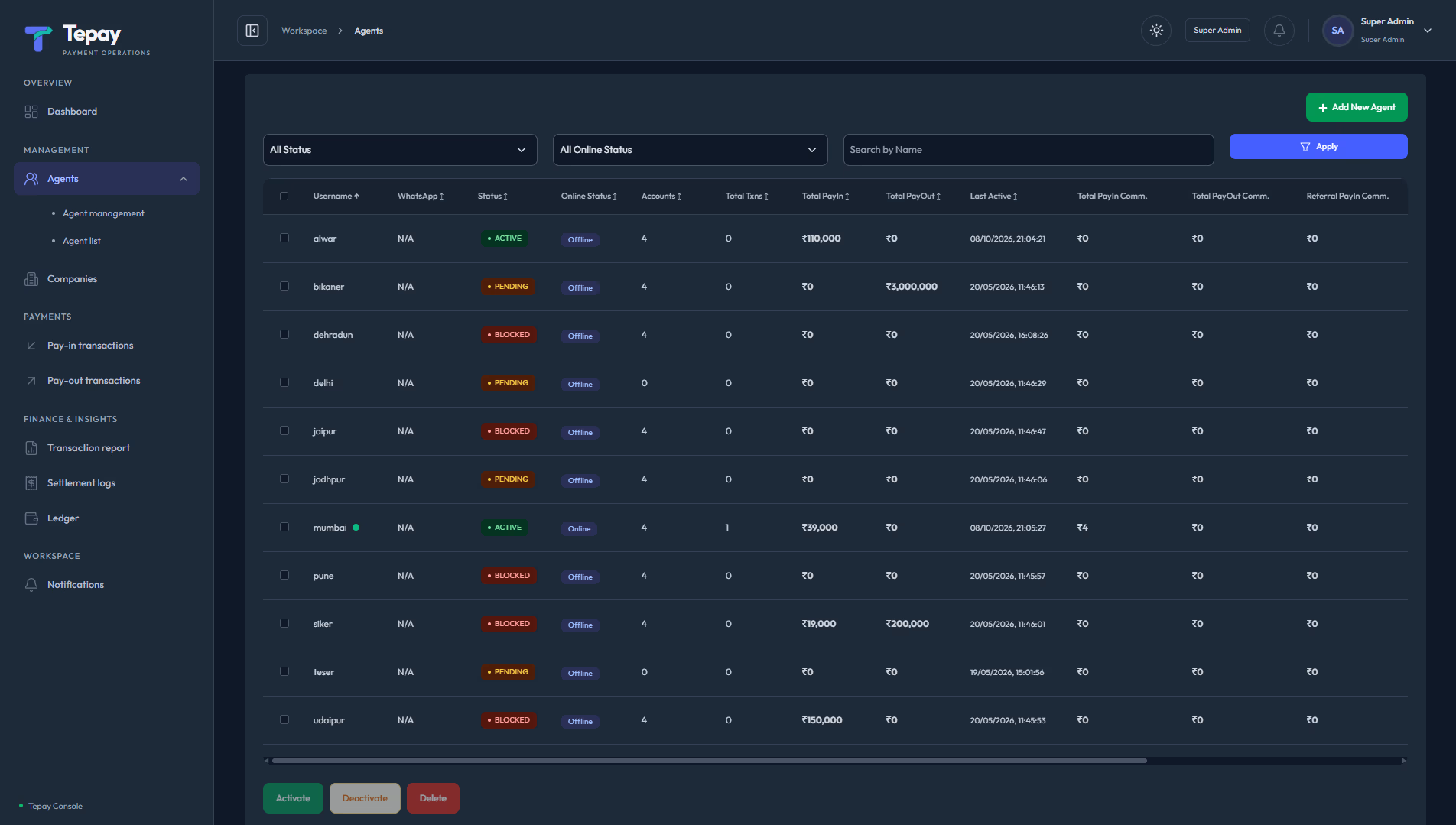
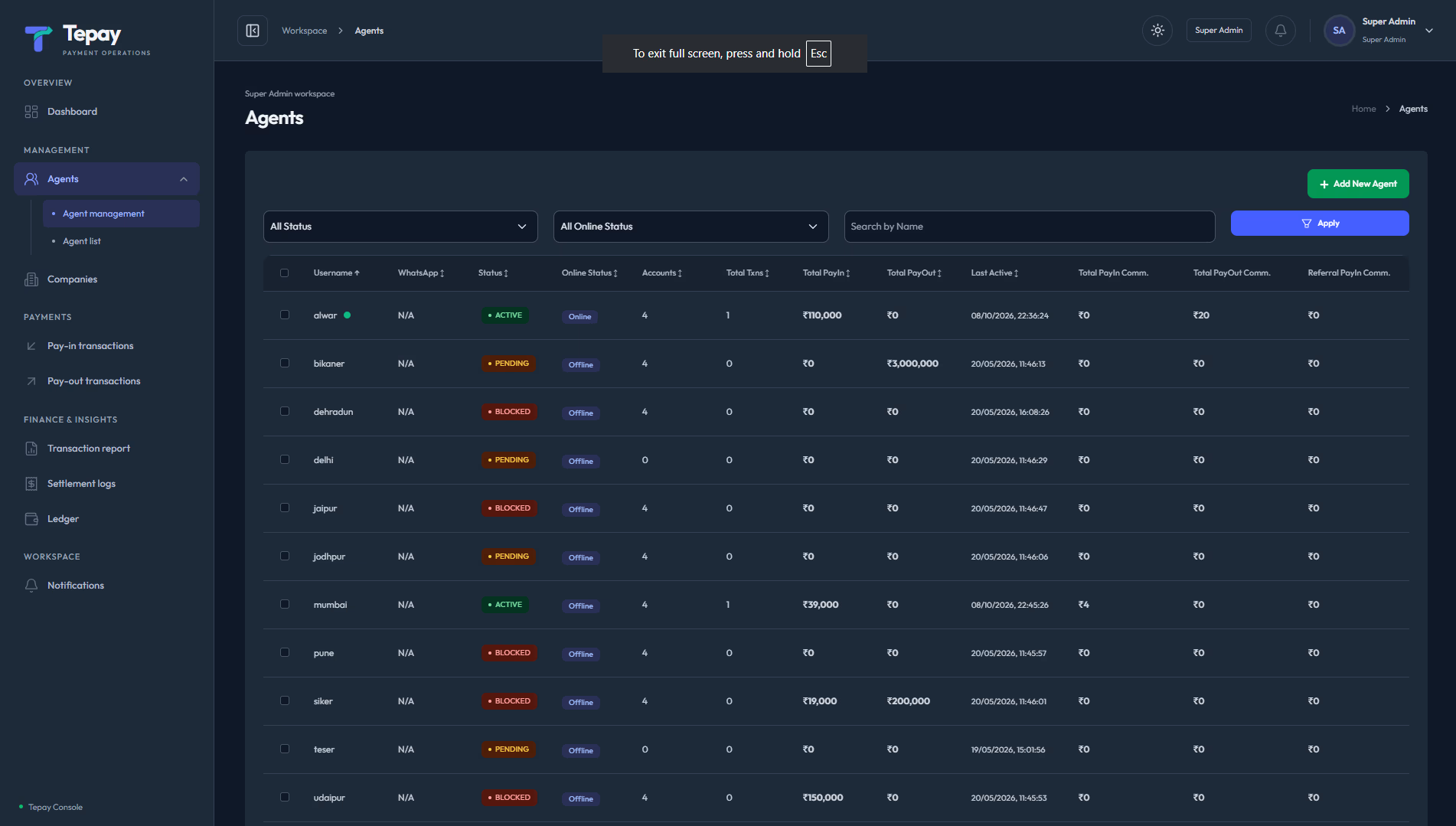
P2P payment operations platform designed for automated pay-in and pay-out queues with instant proof verification. Delivers real-time queue assignment via Socket.IO, deterministic transaction state machines, OneSignal push notifications, and multi-role dashboards.
Discuss this project/ Project Details
Name:Tepay (Payable) – P2P Payment Platform
Role:Backend & Full-Stack Engineer
Stack:Node.js, Express.js, MongoDB, React, Socket.IO, OneSignal, JWT
Highlights:Live WebSocket dispatch, UTR validation, 60s auto-expiry, Public QR checkout
/ Challenge
Coordinating UPI payment routing, payment-proof review and settlement state across multiple operator roles. Needed live queue updates, proof uploads with UTR matching, auto-expiry jobs, and distinct portals for Super Admins, Agents, and Companies.
/ Provided Services
Transaction engine
Automated UPI/bank payment routing, image proof matching, deterministic state transitions, and idempotent settlement handling.
Real-time system & alerts
Socket.IO WebSocket pipelines for live queue assignment, status broadcasts, and OneSignal push alerts.
Multi-role portals & gateway
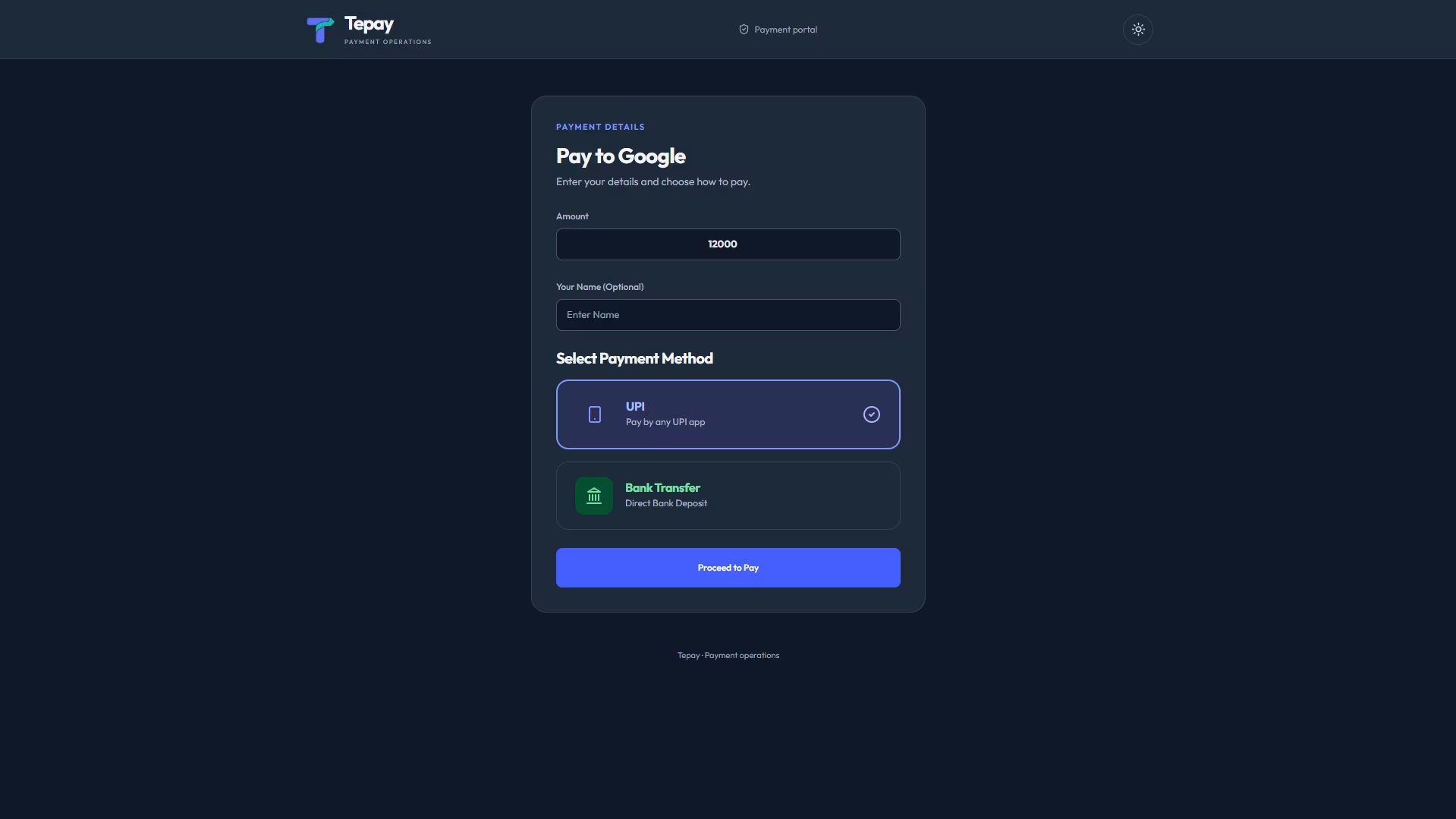
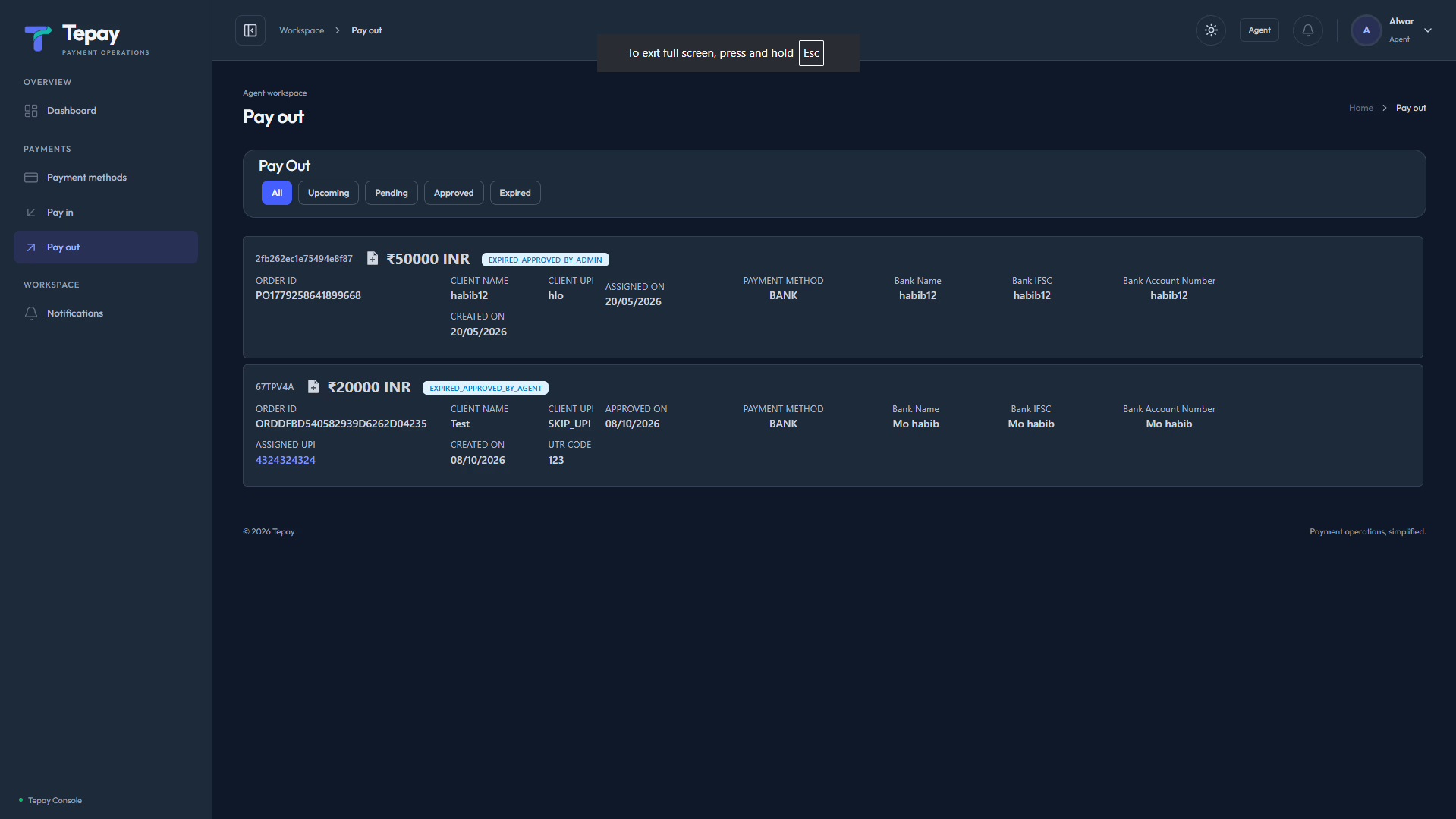
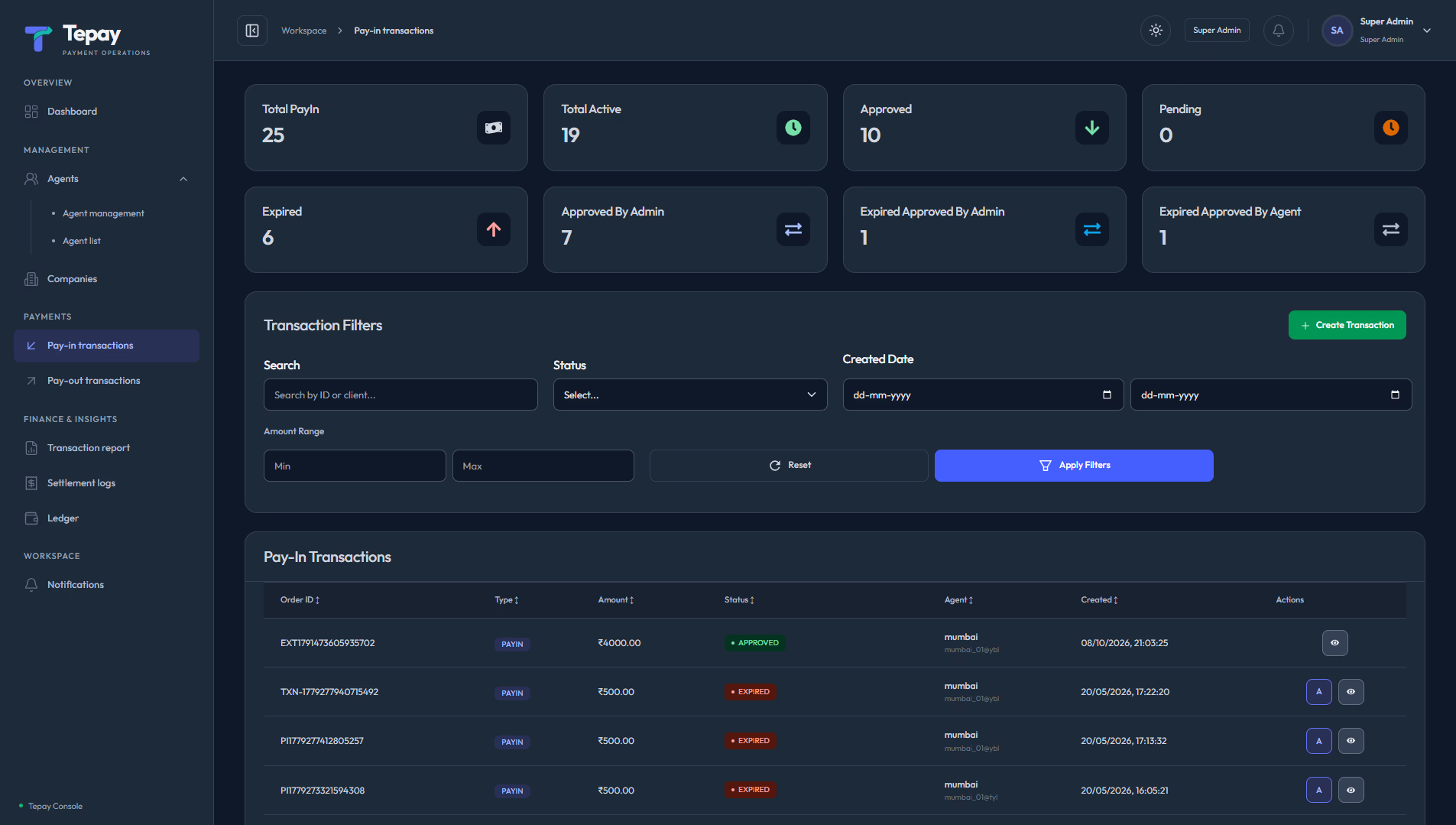
Tailored dashboards for Admins, Agents, and Merchant Companies alongside a frictionless public guest payment gateway.
/ Solution
Built with a resilient Node.js / Express backend, MongoDB ACID transaction sessions, and a React real-time dashboard. Cron workers monitor and expire unmatched orders every 60 seconds while live telemetry balances payment loads across available agents.
/ Tech stack
Node.js, Express & MongoDB
Transaction API coordinating concurrent payment lifecycle events.
Socket.IO & OneSignal
Bidirectional real-time event distribution for instantaneous agent queue alerts and transaction updates.
React & JWT
Secure, role-isolated admin and operator interfaces with live activity feeds and ledger auditing.
Engineering overview
How the system fits together
A payment operations application with role-based dashboards, live queue updates and order-state tracking.
- 01Merchant creates order
- 02API validates request
- 03Agent queue assignment
- 04Payment proof / UTR review
- 05Approved, rejected or expired
- 06Ledger & status notification
Explicit order states
Pending, approved, rejected and expired states make the order lifecycle visible. Expiry workers handle orders that remain unmatched.
Live operations
Socket.IO distributes queue and status updates to role-specific dashboards. OneSignal delivers transaction notifications.
Settlement handling
The described implementation uses idempotent processing and MongoDB transaction sessions to coordinate payment state changes and ledger operations.